
Forgotten Gods
The Daily Aarti was about to begin. People were starting to stream onto the Dashashwamedh Ghat from all directions. There are tourists and devotees both, rich and poor, families and solo travellers, Indians and foreigners making up the throng that was pouring into the area from the streets and the nearby ghats. It was the second day of our trip to Benares, and we’d decided to watch the aarti from the ghat, from up close. We’d taken a boat ride along the river yesterday and seen the aarti from the middle of the Ganga. As we made our way onto the ghat, we find the space on the banks already filling up. On the river, there are rows of boats with chairs arranged on top. These boats are filling up with tourists who have paid to have a comfortable seat in the house. Further from the shore, after the rows of large boats anchored and linked by planks, the boats which have taken tourists out for rides have gathered to watch the show.
The crowd is jostling, soon we’ll have to find a spot to watch the proceedings from or risk being swept away in the rush that is creeping in as the time for the aarti inched closer. Me and Vishnu, both had our cameras out and were planning on taking pictures of the aarti. We find a spot on the raised platforms that rise up from the river, right in front of the area where the aarti happens. As we clamber on to this platform, we are unsuccessful in trying to avoid stepping on the numerous idols that are scattered in our path.
The idols were one of the things about Varanasi we had found fascinating. No space, no crevice between rocks was out of bounds for the gods, who were innumerable and scattered all over the landscape. And equally fascinating was the presence of offerings and incense sticks even the smallest and well-hidden of these idols. With a pantheon of a million gods to cater to each aspect of nature and the human experience, we as a people have a voracious appetite for gods of all shades and colours. Nowhere is this Indian phenomenon on display more prominently that here in Varanasi, brimming with its religious fervour.
The spot we’ve chosen puts us close to the priests. As I settle into my spot, more people are trying to edge their way onto the platform. The struggle to hold on to my spot becomes almost like the experience in a rush hour train. As the struggle continues different people give up and new opponents take their place. The priests are now in their positions, more than 10 of them, all dressed in silk, making the preparations for the aarti. As they prepare their huge multileveled lamps and prepare the offerings to be made to the goddess, I let my attention wander to the audience that has gathered around the ghat. My eyes fall on a small shrine in a recess built underneath the nearby platform. It’s an unremarkable shrine, by the standards of the setting. A few Shiv Lings placed in a small recess. There are a few small earthen lamps lit before the idol and some offerings made by devotees.
In front of the idols, below the platform I was perched on, I notice a child. She was dressed in a faded, patched up sweater and an equally distressed skirt. She wore a headdress made of bright silk, faded and worn by the elements. She held a plate in her hand with a few scattered coins and currency notes. She was practicing her trade, expertly navigating the throng of devotees that had gathered at this holiest of cities. Begging for alms that flowed freely to even the most insignificant of idols in the land.
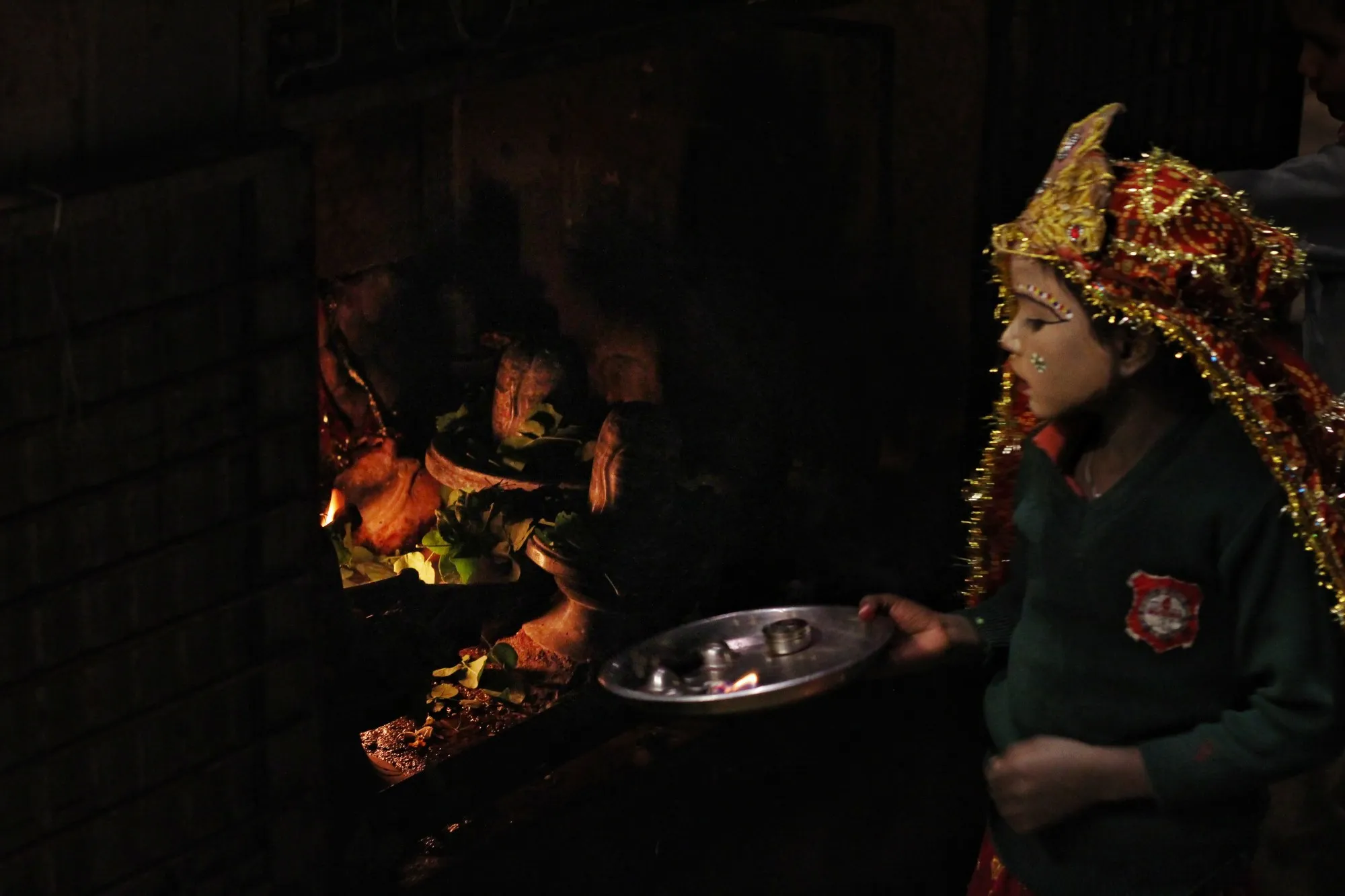
from Dashashwamedh Ghat
My thoughts are broken into by the ringing of bells. The aarti has begun. The priests have begun their show. A dazzling display of flaming lamps towering over our heads. A beautifully choreographed performance to please the gods and the humans gathered here. But my mind turns back to the child who is a god. Her fight for survival. Mostly unseen and almost always forgotten. She hustles to earn her living among the forgotten gods and mortals of the land.